Evolution of the Galaxy Flagship: From S23 Reliability to S26 Speculations
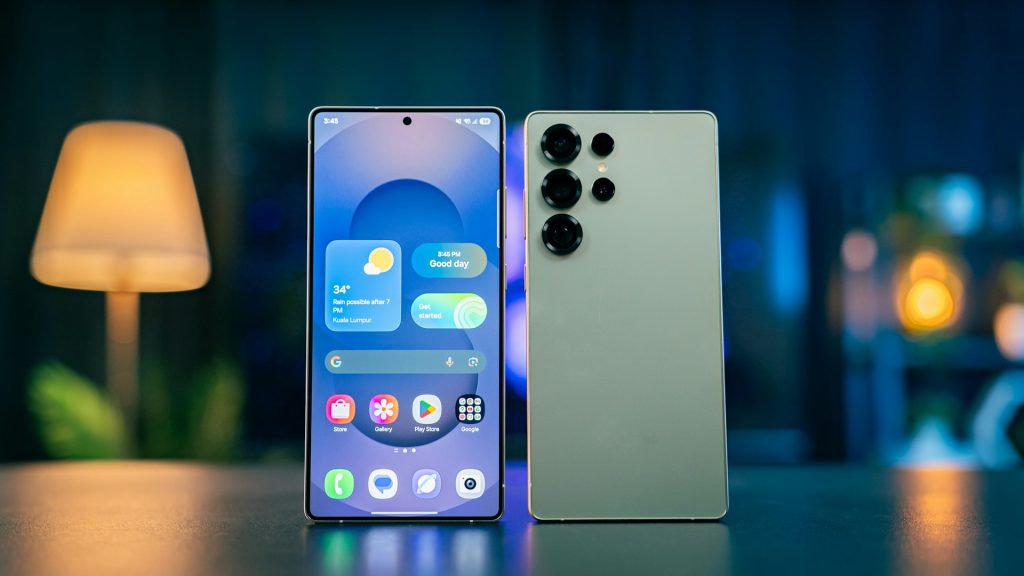
The release of the Galaxy S25 Ultra has undeniably established a new benchmark for Android flagships, boasting a design that feels fresher than ever alongside performance capabilities that sit at the very top of the hierarchy. For users currently holding onto the Galaxy S23 Ultra, a handset that remains formidable and fully supported, this raises a pertinent question regarding the necessity of an upgrade. While the S23 Ultra is aging, it is far from obsolete, and for many, it could easily serve as a reliable daily driver for several more years without faltering. However, occasionally, the allure of the latest innovations justifies moving on from a device that still functions exceptionally well.
Design Philosophy and Ergonomics
Samsung has introduced rather drastic changes to the physical attributes of the Galaxy S25 Ultra, marking a departure from the aesthetic language of its predecessors. Historically, the Galaxy S Ultra series, specifically those housing the S Pen, were characterised by sharp, flat edges at the top and bottom, lending the devices a posh, business-oriented look. This is no longer the case. The new flagship has adopted slightly rounded corners, mirroring the design ethos of the standard Galaxy S25 and S25 Plus, while maintaining a flat frame as well as flat front and back panels.
Material choices have also witnessed a shift, with the Galaxy S25 Ultra employing a titanium frame coupled with Gorilla Glass Armor 2. In terms of sheer dimensions, the new entrant is noticeably sleeker, measuring just 8.2mm in thickness and weighing 218g. This is a substantial improvement over the Galaxy S23 Ultra, which tipped the scales at 234g with a thickness of 8.9mm. While the S23 Ultra retains the makings of a classic with its stainless-steel construction and sharp lines, the lighter profile of the S25 Ultra is a welcome refinement. Both devices, naturally, feature IP68 certification and the ubiquitous S Pen, an accessory that continues to offer unique functionality.
Visuals and Display Technology
The visual experience on the Galaxy S25 Ultra has been enhanced through bezel slimming, allowing the screen size to increase to 6.9 inches, a modest yet notable bump from the 6.8-inch panels seen on previous Ultra models. The display remains a Dynamic AMOLED 2X unit, supporting a QHD+ resolution and a 1-120Hz dynamic refresh rate, but now achieves a peak brightness of 2600 nits. A standout addition is the ProScaler feature, which utilises Artificial Intelligence to upscale content by up to 40 per cent, thereby reducing artifacts in low-bitrate videos and ensuring a more pleasant viewing experience.
As for colour variants, the S25 Ultra offers a titanium-themed palette including Silverblue, Whitesilver, Gray, and Black, with exclusive online options available. This contrasts with the Galaxy S23 Ultra’s selection, which included Lavender, Cream, Phantom Black, and Green.
The Future Horizon: Galaxy S26 Leaks
While the S25 Ultra is the current champion, the rumour mill is already active regarding the next generation. Information leaked by Roland Quandt suggests that the cat is out of the bag for the “Galaxy S26” series. It appears Samsung is planning to place a heavy emphasis on software and AI capabilities within the upcoming One UI 8.5, while hardware upgrades will be more conservative.
According to these reports, the European market will see the Galaxy S26 and S26+ powered by the new Samsung Exynos 2600 chipset. Performance-wise, this processor is expected to match the Snapdragon 8 Elite Gen 5, which will be exclusive to the Galaxy S26 Ultra in this region, boasting clock speeds of up to 4.74 GHz. The upcoming lineup will also feature Wi-Fi 7 and Bluetooth 5.4, with the Ultra model offering dual physical SIM slots, whereas the smaller models will rely on a single physical slot and eSIM.
Power and Configuration
Significant adjustments are anticipated in the power department for the future lineup. The S26 Ultra is tipped to support charging speeds of up to 60 watts, with the Plus model handling 45 watts and the standard S26 remaining at 25 watts. Battery capacities are reported to be 4300 mAh for the standard model, 4900 mAh for the Plus, and 5000 mAh for the Ultra. Wireless charging will support the Qi2 standard, although Samsung has reportedly opted against integrating magnets into the chassis.
In a move to rationalise storage options, the 128GB variant is set to be discontinued, with the entry-level now starting at 256GB. All models will come equipped with 12GB of RAM as standard, with the 1TB variant of the Ultra packing a massive 16GB of RAM. Pricing for the S26 series is expected to start at €999 for the base model, rising to €1269 for the Plus, and a minimum of €1469 for the Ultra. With Android 16 out of the box, the future Galaxy lineup seems poised to continue the legacy of high-end performance, even as the S25 Ultra currently dominates the market.